
Most discussions about resilience focus on mindset. Think differently. Stay positive. Keep going.
But what happens when the challenge is not simply mental? What happens when the ground beneath your feet literally changes?
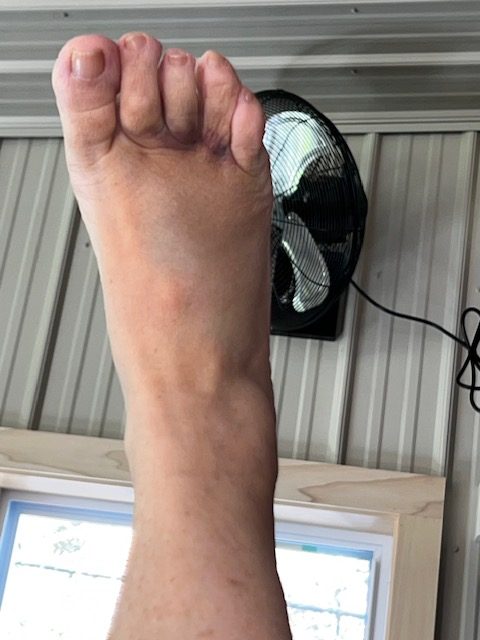
A mobility injury alters reality in ways that are difficult to understand until you experience it. Simple tasks that once required no thought suddenly become projects. Stairs become obstacles. Showers become risk assessments. Carrying a cup of coffee becomes a strategic exercise. The distance between a parking lot and a building takes on new meaning. The physical environment has not changed, but your relationship to it has. The world you navigated yesterday is no longer the world you navigate today.
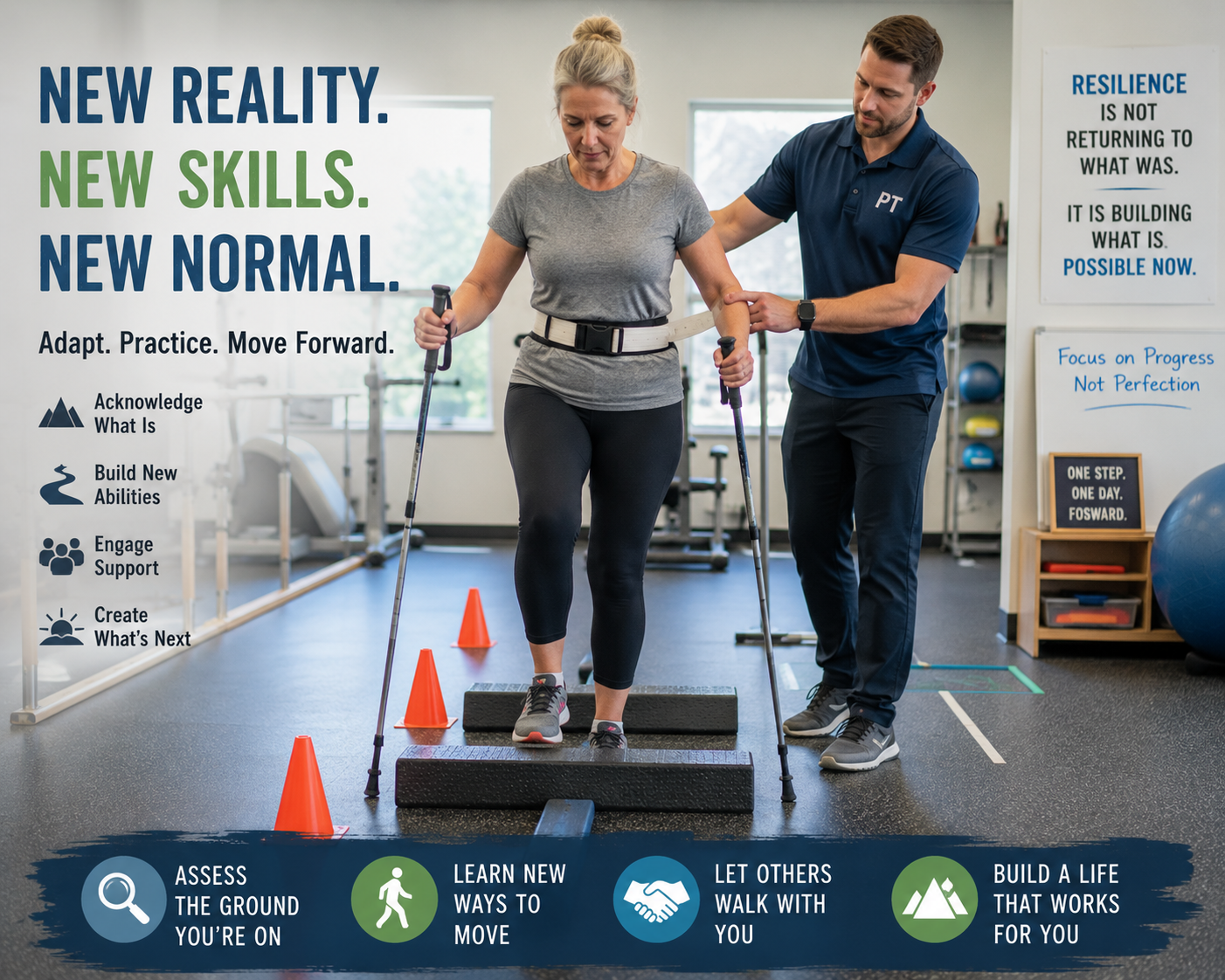
The Reality-Based Resilience Project studies what happens next. The first step is acknowledging the new reality without pretending it doesn’t exist. The goal is not to return immediately to life as it was before the injury. The goal is to accurately assess the constraints that exist today and begin adapting to them. This often requires abandoning the illusion of complete independence. Many of us spend our lives believing that resilience means doing everything ourselves. In reality, resilience often means learning how to build systems of support.
One of the most profound lessons of mobility adaptation is discovering that asking for help is not weakness. It is a skill. Family members, friends, neighbors, healthcare providers, adaptive equipment specialists, and community resources all become part of a new operating system. The challenge is not simply accepting assistance. It is learning how to engage others in a way that preserves dignity, creates mutual respect, and allows everyone involved to contribute meaningfully.
The process is rarely linear. There are frustrations, setbacks, and moments of grief for activities that can no longer be performed in the same way. Yet there are also discoveries. New tools emerge. Alternative methods develop. Unexpected allies appear. What initially feels like a shrinking world often becomes a redesigned world. Not identical to the one that existed before the injury, but functional, meaningful, and sometimes surprisingly rich.
Reality-based resilience does not ask, “How do I get back to normal?” Instead it asks, “Given the reality that exists today, what is the best life I can create from here?”
That question changes everything.
Because resilience is not the ability to deny limitations. It is the ability to adapt to them. It is not measured by how closely we recreate the past. It is measured by how effectively we build a new future using the resources available today.
When the ground beneath your feet changes, resilience begins by learning to stand differently.